Embedded System Design Vahid Givargis Pdf Writer
- Embedded System Design A Unified Hardware/Software Introduction Solution Manual Frank Vahid Department of Computer Science and Engineering University of California, Riverside Tony Givargis Department of Information and Computer Science University of California, Irvine John Wiley & Sons, Inc.
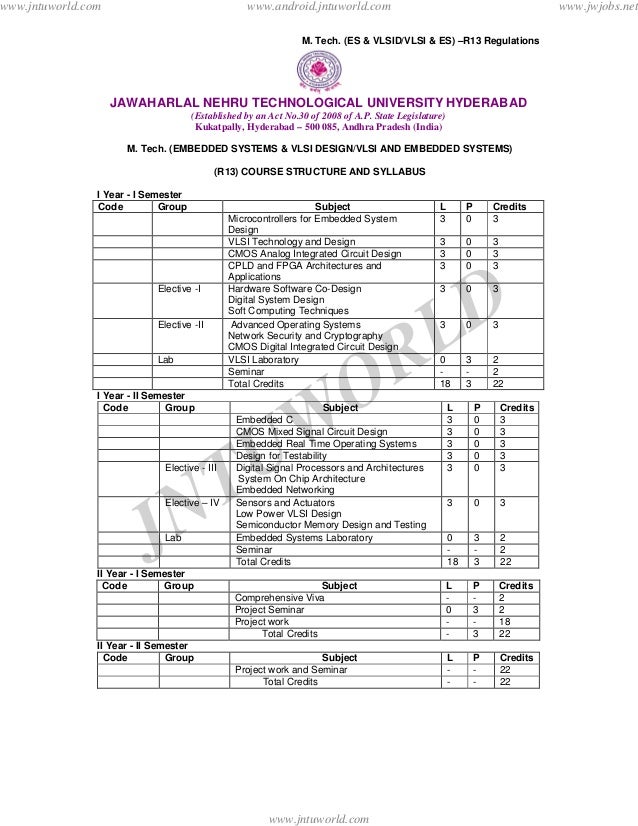
- M.Tech- Embedded System. M.Tech- VLSI. M.Tech- VLSI Design. M.Tech- VLSI System Design. M.Tech- Embedded System & VLSI Design. A student shall be eligible to write University examinations if he acquires a. Frank Vahid, Tony D. Givargis, “Embedded system Design: A Unified.
Embedded System Design Vahid Solution. Frank Vahid and Tony Givargis solution manual get it free only. SYSTEMS DESIGN FRANK VAHID SOLUTIONS MANUAL PDF Ebook Rtl. Embedded System Design- A Unified Hardware Software Introduction - Frank Vahid. This action might not be possible to undo. Are you sure you want to continue? CANCELOKcanceldelete collection.
CSEE 4840 Embedded System Design Spring 2004 Highlights General Information Class meets Tuesdays and Thursdays, 11:00AM-12:15PM, 627 Mudd (this has changed) Mudd 1235 is the lab, which is filled with Linux workstations and FPGA boards. Registered students will receive accounts on these machines and 24-hour badge access to this room. Do the labs in groups of three. Project groups should be three students or more. Why we needed a bigger classroom Staff name email office hours location Prof.
Stephen Edwards T, Th 1-2 462 CSB Cristian Soviani W 2-4 1235 Mudd (Office 472 CSB) Josh Mackler T 12:40-2:40 1235 Mudd Please begin email subject lines with CSEE 4840 Overview Prerequisites: ELEN E3910 or COMS W3843 or the equivalent. Embedded system architecture and programming. I/O, analog and digital interfacing, and peripherals. Weekly laboratory sessions and term project on design of a microprocessor-based embedded system including at least one custom peripheral.
Knowledge of C programming and digital logic required. Lab required. This is a modernization of ELEN E3940y, Microprocessor Laboratory.
Its goal is to introduce you to issues in hardware/software interfacing, practical microprocessor-based system design issues such as bus protocols and device drivers, and practical digital hardware design using modern logic synthesis tools. You will put all of this to use in the lab where you will be given the opportunity to implement, using a combination of C and the VHDL hardware description langauge, a small embedded system. The focus of the course will be a lab, which will be in two parts.
During the first half of the class, teams will each implement the same 'canned' project designed by the instructor and be given substantial guidance. This project is meant as an opportunity for you to learn the development tools and basic concepts. During the second half, each team will design and implement a comparable project of their own with guidance from the instructor and TAs. This course is designed to take over the role ELEN 3940 once played in the EE and Computer Engineering curriculum, i.e., as a 'capstone' class in which students will integrate their knowledge of digital logic, programming, and system design to produce a real system. It is intended to complement ELEN 4340, Computer Hardware Design.
4840 will focus more on system-design issues and include a large section on hardware/software integration. Students in 4840 will use processors and peripherals as building blocks. By contrast, students in 4340 have logic gates as building blocks. Possible second projects include:.
Frank Vahid
Digital tone control (analog audio in/out, digital DSP operations). Digital sound effects processor (e.g., echo, tone shifting). Real-time spectrum analyzer (audio in, FFT, VGA display). Simple video effects processor (e.g., solarization, inversion). Speech synthesizer (analog audio out, hard-wired vocal tract models).
Digital picture frame (CF to JPEG decoder, VGA out). Internet radio (digital audio in via Ethernet, analog audio out) Prerequisites ELEN E3910 or COMS W3843 or the equivalent. You must understand digital logic design and C programming.
Prior experience with hardware description languages, FPGAs, or embedded processors is not required. Schedule Date Lecture Notes Reading Due January 20 Embedded Systems Ch. 1, 11 January 22 HW/SW Interfaces Ch. 3, 6 January 27 January 29 Processors, FPGAs, and ASICs Ch. 3, 10 February 3 Hardware/software tradeoffs Ch. 7 February 5 (class canceled) Lab 1 February 10 Serial Communication Ch. 4, 6 February 12 VHDL 1 VHDL Lab 2 February 17 VHDL 2 February 19 VHDL 3 Lab 3 February 24 Video Proj.
Proposal February 26 Memory Ch. 5 Lab 4 March 2 (class canceled) March 4 Lab 5 Midterm Out March 9 March 11 Midterm Due March 15-19 Spring Break March 23 March 25 Lab 6 March 30 April 1 Proj. Design April 6 April 8 April 13 April 15 Demo April 20 April 22 April 27 April 29 May 10-11 Project Demos May 11 Project Reports and.tar.gz files Due Required Text Frank Vahid and Tony Givargis.
Embedded System Design: A Unified Hardware/Software Introduction. Deliberately blurs the line between hardware and software implementation of embedded system components. Near Columbia, this is available at at the corner of 114th and Broadway.
University Of California Riverside
Textbooks are downstairs. The Project You'll perform a design-it-yourself project in the second half of the class. There are five deliverables for the project:. A short project proposal describing in broad terms what you plan to build and how you plan to build it. A detailed project design describing in detail the architecture of your project, both hardware and software.
This should include block diagrams, memory maps, lists of registers: everything someone else would need to understand your design. You should have done some preliminary implementation work by this point to validate your design. An early demo of your project. It should be roughly 75% working and be showing signs of life. This is to make sure you are making reasonable forward progress. A presentation on your project to the class.
A final project report Project groups should be three students or more. The Project Report This is a critical part of the project and will be a substantial fraction of the grade.
Include the following sections:. An overview of your project: a revised version of your project proposal.
The detailed project design documents: a revised version of the project design. A section listing who did what and what lessons you learned and advice for future projects. Complete listings of every file you wrote for the project. Include C source, VHDL source, and things such as.mhs files. Don't include any file that was generated automatically.
Include all of this in a single.pdf file (don't print it out) and email it to me on the due date. Also create a.tar.gz file (see the online documentation for the `tar' program to see how to create such a file. Briefly, create a file called `myfile' with the names of all the files you want to include in the archive and run tar zcf project.tar.gz `cat myfiles` to create the archive.) that just includes the files necessary to build your project, such as I did for the labs. Also email this to me by the due date.
Embedded System Design: A Unified Hardware/Software Introduction “Embedded System Design: A Unified Hardware/Software Introduction” authored by Professor. Frank Vahid and Professor Tony Givargis was published by John Wiley and Sons, Inc.
In October 2001. In today’s world, embedded systems are everywhere – homes, offices, cars, factories, hospitals, planes, and consumer electronics. The huge numbers and new complexity call for a new design approach, one that emphasizes high-level assembly language programming and logic design. This exciting new book presents the traditional distinct fields of software and hardware design in a new unified approach. It covers trends and challenges, introduces the design and use of single-purpose processors (hardware) and general-purpose processors (software), describes memories and buses, illustrates hardware/software tradeoffs using a digital camera example, and discusses advanced computation models, control systems, chip technologies, and modern design tools.